
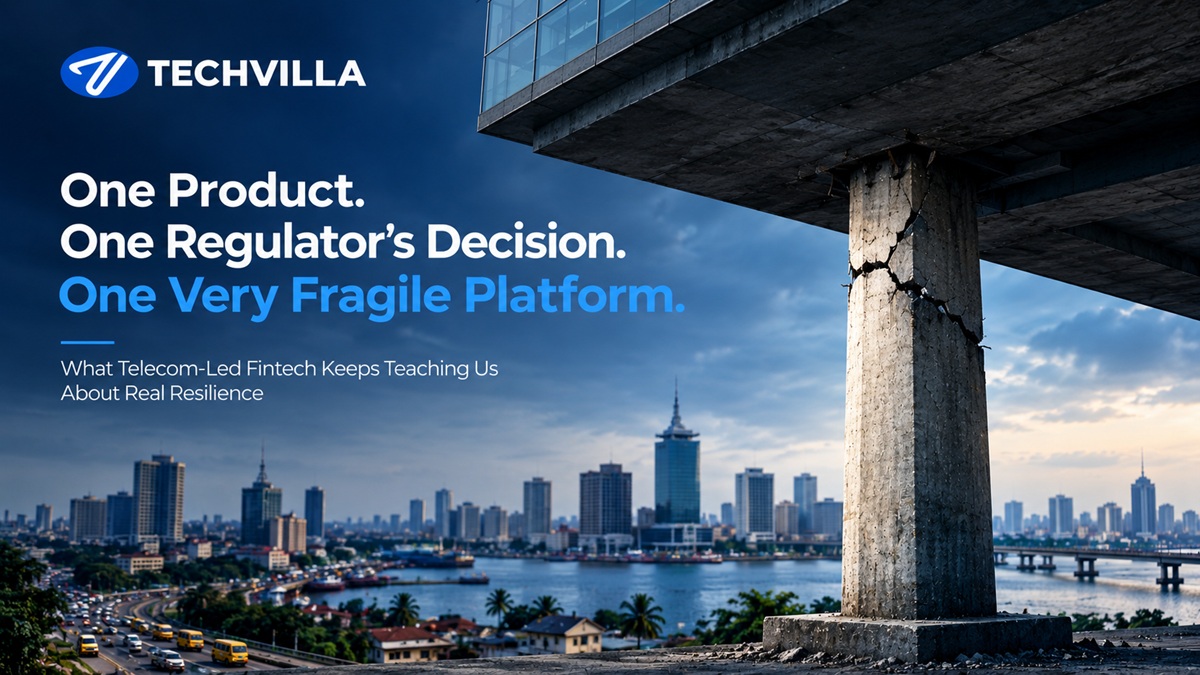
Watch any major telecom operator's financial results closely enough, and a pattern starts to repeat itself with uncomfortable regularity. A telco spends years building toward a fintech ambition, finally gets a foothold, and then discovers, usually the hard way, that the foothold was never as diversified as the strategy documents suggested. One product line gets paused by a regulator, and suddenly a business that called itself a fintech platform reveals it was really a single-product lending operation wearing a platform's clothing.
This is not one company's story. It is becoming the defining pattern of how telecom-led fintech is actually unfolding across emerging markets right now, and it is worth thinking through carefully, because it says something important about diversification, regulatory dependency, and what genuine platform-building actually requires.
The Familiar Arc
The pattern tends to unfold in a predictable sequence. A telecom operator, sitting on an enormous existing subscriber base, recognises that owning the customer relationship for communication naturally positions it to own the customer relationship for money movement too.
It applies for and eventually secures some form of restricted financial license, often a payment-focused license rather than a full banking one, since full banking charters tend to be guarded jealously by incumbent financial institutions and their regulators. That restricted license usually comes with explicit legal boundaries: the telco can hold deposits and move money, but it is often barred outright from lending directly or dealing in foreign exchange, the very activities that generate the highest margins in financial services.
So the telco finds a workaround. Short-term micro-lending, airtime advances, small consumer credit products, dressed up as a convenience feature rather than a lending business, becomes the practical path to the profitable part of finance the restricted license was designed to keep out. For a while, it works remarkably well. The revenue from this single workaround product often ends up dwarfing every other fintech revenue line combined, sometimes by a factor of fifteen or twenty to one.
The Moment the Pattern Breaks
Then a second regulator, not the one that issued the original license, notices that a telecom company is now, functionally, one of the largest consumer lenders in the market, operating outside the licensing and consumer protection framework built specifically for lenders. A new classification arrives. Compliance deadlines get set, extended, and set again. Eventually, faced with genuine legal exposure, the telco suspends the product rather than risk operating in a regulatory grey zone.
What follows is often a real jurisdictional fight, not a simple compliance hiccup. Industry associations sue. Courts grant injunctions. The legal question at the centre of it, whether the second regulator ever actually had authority over a telecom-licensed entity in the first place, can take months to resolve, and the resolution is often a split decision that satisfies nobody outright. Meanwhile, actual customers, often lower-income users who depended on that product for genuine emergencies, are caught in the middle, and public frustration adds real reputational pressure on top of the regulatory one.
By the time the dust settles and the product quietly returns, the business has learned something uncomfortable about itself: the fintech platform it had been describing to investors was, in practice, a single product away from losing the overwhelming majority of its non-core revenue in one regulatory decision it did not control.
Why This Keeps Happening
The deeper pattern here is not really about any specific product or regulator. It is about the structural gap between what a restricted financial license allows a company to do directly, and what the market actually rewards financially. Deposits and payments generate thin margins.
Lending generates thick ones. A company holding a license that permits the thin-margin activity but bars the thick-margin one faces a genuine strategic temptation to find the nearest legally defensible path toward the profitable activity anyway, and workaround products, by their nature, sit closer to regulatory grey areas than deliberately designed, fully licensed lending businesses do.
This is not a story about any one company cutting corners. It is closer to an inevitable consequence of how financial regulation is structured almost everywhere: license categories drawn along old boundaries, telecom versus banking versus consumer credit, struggling to keep pace with companies that increasingly operate across all three at once. The regulators are not wrong to intervene. The companies are not entirely wrong to have pushed into the grey area either, given the sheer size of the underserved market their existing distribution reach could serve. Both sides are responding rationally to an outdated map.
What the Smarter Response Looks Like
The more interesting question is what a business does after living through this once. The companies that treat the disruption purely as a legal problem to be resolved and then return to exactly the same single-product dependency are setting themselves up to relearn the same lesson eventually, under a different regulator, on a different product. The companies that treat it as a structural diagnosis, evidence that their platform was never actually diversified, tend to respond very differently: not by abandoning the profitable activity, but by rebuilding it properly, often through partnership with the very type of licensed institution the original restricted license was designed to protect, rather than around a workaround that regulators were always likely to eventually notice.
This is the quieter, less dramatic version of platform-building, and it rarely generates the same headlines as a bold new product launch. But it is the version that survives the next regulatory cycle instead of getting blindsided by it again.
The Broader Lesson Beyond Telcos
This pattern is not exclusive to telecom companies expanding into finance. Any business built substantially around one workaround, one grey-area product, one dependency on a single external decision it does not control, is carrying the same structural risk, whether that dependency is regulatory, a single platform partner, or a single major client. The businesses that genuinely diversify that dependency before being forced to, rather than after, are the ones that experience regulatory or market shifts as a manageable inconvenience rather than an existential threat.
This is the same discipline we have returned to throughout our work with Nigerian businesses building on top of larger platforms and evolving regulatory frameworks: real resilience comes from architecture that assumes no single rail, license, or partner is permanent, not from betting everything on the workaround that happens to be working today.
At Techvilla, we help businesses build technology and systems with exactly this kind of resilience in mind, so a shift in a partner's policy, a regulator's classification, or a platform's pricing is a contained adjustment, not a crisis that exposes how little diversification actually existed underneath the strategy.
Chat with us on WhatsApp or start a free consultation.
Because the goal is not just to build a website. The goal is to make your business digital, visible, and future-ready.
Need technical assistance?
I'm Techvilla Admin. We help businesses move from offline to online with simple, clear steps. If you have questions about this article or need help with your project, let's chat.